Maternity Care for Culturally and Linguistically Diverse Women
At the recent Parliamentary Friends for Maternal Health forum, we explored Maternity Care for Culturally and Linguistically Diverse Women: Addressing Challenges and Opportunities, where we heard research findings alongside the lived experiences of culturally and linguistically diverse women.
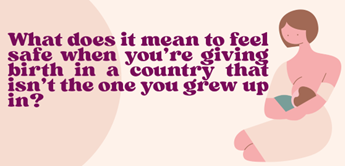
For many women, feeling safe during pregnancy and birth is about more than good clinical care. It’s about being understood. It’s about having someone explain what is happening in a language they fully understand. It’s about being listened to, respected, and knowing that their concerns matter.
Imagine you’re about to have a baby. You’re in a hospital where the language isn’t your first language. You don’t know how the health system works. Your family is far away. You’re in pain, worried, and trying to make sense of unfamiliar words and faces.
Now imagine asking for an interpreter and not getting one. “I kept telling them to get an interpreter. They didn’t, and they sent me home.”
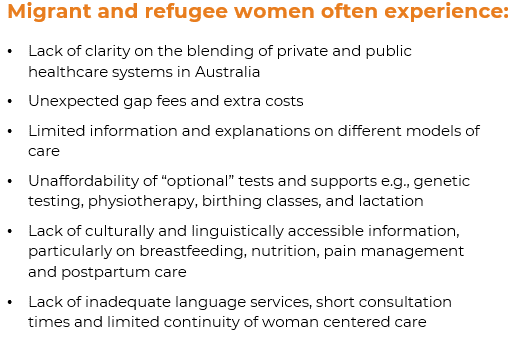
For many migrant and refugee women, this isn’t an isolated story. It’s part of the reality of navigating pregnancy and birth while also building a life in a new country.
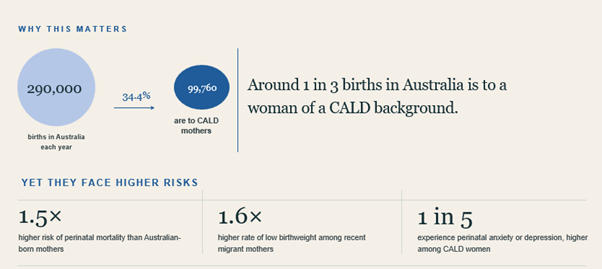
In Australia, around one in three babies is born to a woman from a culturally and linguistically diverse (CALD) background. Yet too often, maternity services are designed around the experiences of women who speak English and are familiar with the health system.
We heard how this shapes women’s experiences. A woman who speaks fluent English and understands the system is often guided through her pregnancy. A woman who doesn’t may be rushed through appointments, talked over, or struggle to ask the questions that matter most. Sometimes, she is treated as though she is the problem rather than someone trying to navigate an unfamiliar system.
Feeling safe in maternity care isn’t only about having skilled doctors and midwives. It’s about feeling heard, respected, and understood.
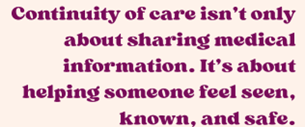
Continuity of care is often described as seeing the same healthcare professional throughout pregnancy, birth and the postnatal period. That’s important. But continuity is about more than sharing medical records or ensuring information follows a woman through the system. It’s about building relationships that help women feel known, trusted, and safe.
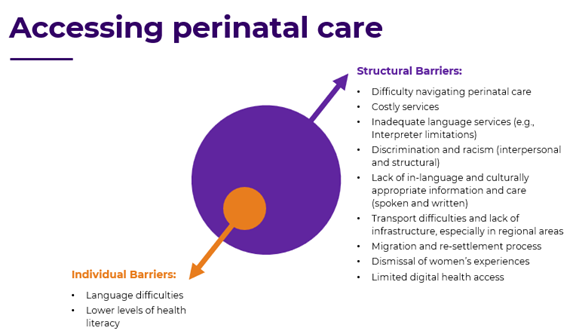
Research presented at the forum showed that migrant and refugee women experience poorer maternity outcomes than Australian-born, non-Indigenous women. They are more likely to experience delays in accessing antenatal care, birth trauma, pregnancy complications such as gestational diabetes, poorer mental health outcomes, and higher rates of neonatal death.
These differences are not inevitable. They reflect barriers that can and should be addressed.
One presenter reflected on the isolation many migrant women experience: “For us as migrants, we tend to be already isolated… we are not only isolated at home but also at the workplace, and we tend to be isolated by the healthcare services.”
These are not simply communication challenges. They are equity challenges.
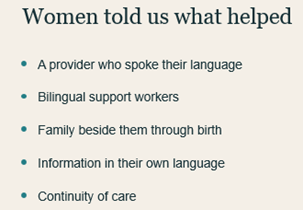
Women consistently tell us what would make a difference: antenatal education in their own language, qualified interpreters when they need them, culturally appropriate information, peer “sister groups”, and support from women within their own communities who are trained to walk alongside them through pregnancy and early parenthood.
These are not optional extras. They are the foundations of equitable maternity care.
We also need to rethink how we measure women’s experiences.
If maternity experience surveys are only available in English, we’re missing the voices of a third of the women giving birth in Australia. We cannot improve care if we don’t hear from the people experiencing the greatest barriers.
You cannot fix what you cannot see.
Collecting women’s experiences in their own languages would provide a much clearer picture of what is working, where gaps exist, and how services can improve.
Real change also means partnering with communities rather than simply consulting them. Co-designed resources, community-led research, multilingual outreach programs, and policies that recognise the intersecting impacts of migration, language, culture, and visa status all have a role to play.
Every woman deserves to feel safe when she gives birth. That sense of safety should never depend on the language she speaks, where she was born, or whether she understands Australia’s healthcare system.
When we listen to migrant and refugee women and design services with them rather than for them we don’t just improve care for one group of women. We create a maternity system that is more compassionate, equitable, and responsive for everyone.
Because every maternity journey matters. And every woman deserves to feel safe, heard, understood, and supported as she brings new life into the world.
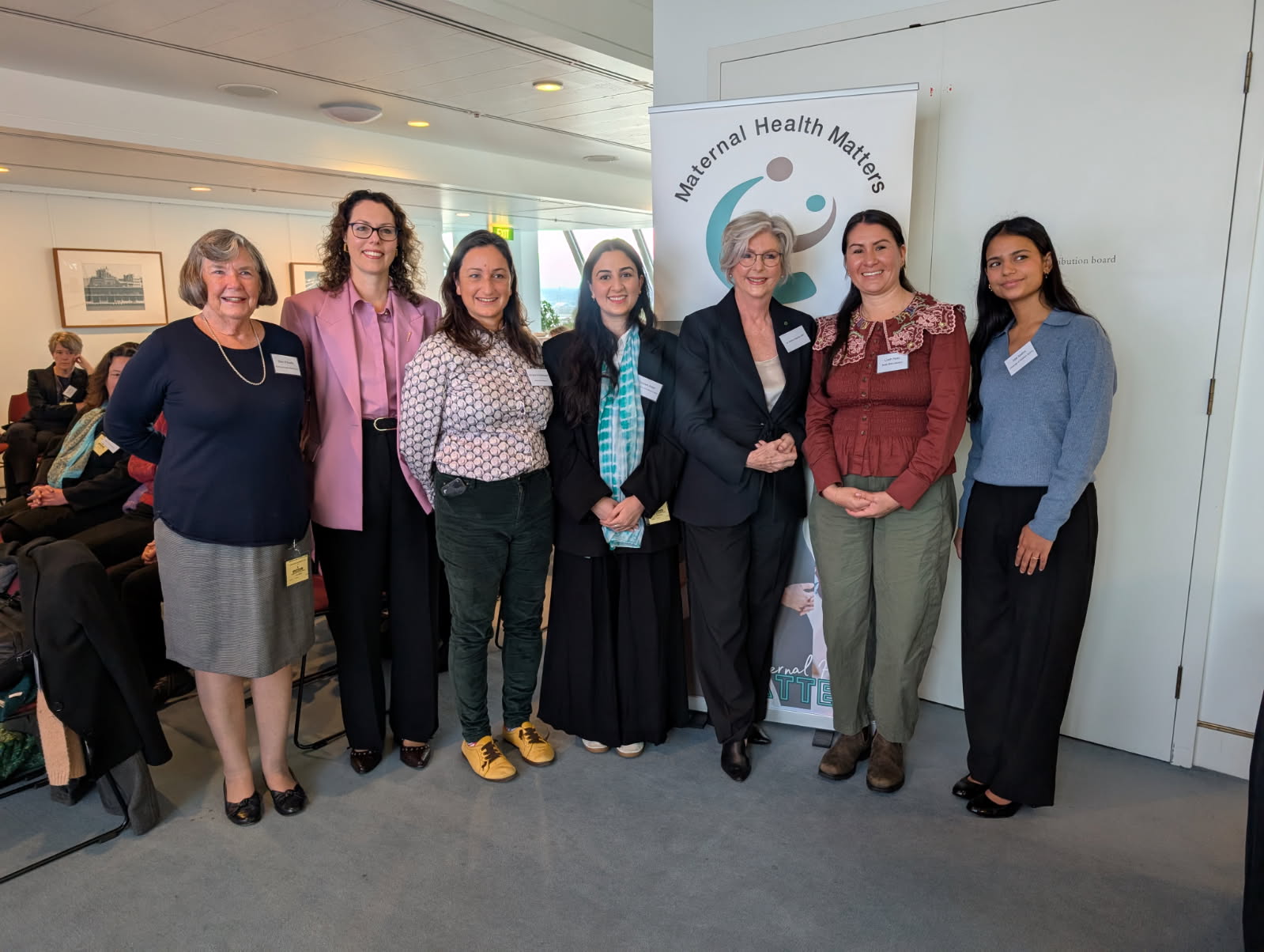
Thank you to Alicia Payne MP, Sharon Settecasse, of Better Births Illawarra, Delaram Ansari of Multicultural Centre for Women’s Health, Helen Haines MP Lizeth Perez, and Sital Sadhra, a registered midwife completing research at Western Sydney University.