Unlocking Lifelong Health by Getting the First 400 Days Right – key initiatives to achieve reform in maternity care.
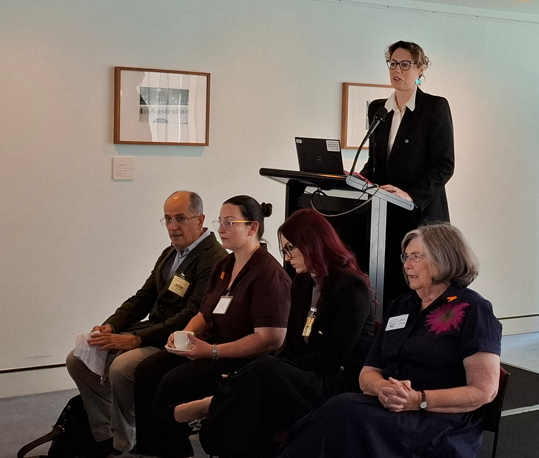
On Wednesday 28 October 2026, the Australian Parliamentary Friends of Maternal Health hosted a session on Unlocking Lifelong Health by Getting the First 400 Days Right – key initiatives to achieve reform in maternity care.
Thank you to Alicia Payne and Dave Sharma for being co-chairs. We missed Helen Haines being with us and honoured her contribution to improving maternal health.
Katelyn Commerford spoke to the importance of home birth and continuity of midwifery care from conception and into the postnatal period. She highlighted her concerns on the impact of the changes to PII for midwives.
Ashleigh Foy spoke to the increasing concern that midwives will be denied access to professional indemnity insurance for 1 January 2027 and the impact it will have on vulnerable women. Ashleigh also highlighted the benefits of a primary health focus to maternity care.
Dr Andrew Bisits spoke to his experience of establishing continuity-of-midwifery-care models and a homebirth program at the Royal Hospital for Women, the need to ensure new doctors are competent in supporting a well pregnancy and normal birth and a need for medico legal reform.
Ellen O’Keeffe spoke to the need for a Clinical Care Standard for Maternity Services, linked to accreditation, that helps translate evidence into practice and strengthen accountability across Australia’s maternity system. This should be supported by a consumer resource that provides women with independent, evidence-based information to understand their maternity care options, participate meaningfully in clinical discussions and make informed decisions about their care.
Good maternity care doesn’t happen by chance. It must be designed.
And that starts by listening to women.
We must centre women’s voices, value lived experience, and co-design maternity services with all women. Not as an afterthought, but as a core part of how our maternity system is designed and delivered.
So, what needs to change?
- Embed co-design in maternity services. Women must be genuine partners in shaping their care. This includes access to homebirth services and professional indemnity insurance for all midwives attending homebirths.
- Invest in continuity of midwifery care. Every woman deserves consistent, respectful and person-centred care throughout pregnancy, birth and the postnatal period. This means investing in continuity of midwifery care, cultural safety training and access to professional interpreters.
- Address medico-legal barriers to woman-centred care. When considering medico-legal reform, we must ask whether our legal, regulatory and insurance frameworks support evidence-informed clinical decision-making, honest communication, and women’s right to make informed choices, while maintaining safety and accountability. We need a maternity system that enables clinicians to exercise appropriate professional judgement and supports physiological birth and diverse models of care, including midwifery-led care and homebirth, so that both women and the professionals caring for them are supported by a system designed to deliver safe, respectful and woman-centred care.
- Turn vision into accountability. Australia’s National Woman-Centred Care Strategy sets an important vision. Now, we need a Woman-Centred Maternity Care Standard to translate that vision into measurable practice and ensure services deliver on their promises. Because what gets measured gets improved — and what isn’t measured too often gets missed.
Together, these actions can shift us from intention to implementation.
They can help ensure maternity care is shaped not by system convenience, fear or institutional constraints, but by evidence, women’s needs, rights and experiences.
We all want the same outcome: safer care, better outcomes, and women who feel seen, heard, respected and safe.
Not because of where a woman comes from, how she chooses to give birth, or which model of care she accesses, but because that is the standard every woman deserves.
Let’s build a maternity system that delivers exactly that.
Not for some women. For EVERY woman.